







The most important things to know before arranging a bridging loan.Key Takeaways
What Is a Bridging Loan?
A bridging loan is a short-term loan most often used to buy property, with a typical term of 12 months. It is a form of lending often used to buy a new home while you're waiting for another property to sell. Essentially, bridging your gap in funding.
Most bridging loans allow you to borrow up to 75% of a property's value, although some lenders may offer up to 80% depending on the circumstances. Interest can be paid monthly, but this is typically avoided as interest can be rolled up until the end of the term.
They are suitable for fast, time-critical, or complex transactions where you want to unlock the funds tied up in a property.
Bridging finance requires a viable repayment plan to obtain approval and is repaid once long-term funds are in place. Common methods of repayment include selling the property used as security or refinancing the loan with a traditional mortgage.
A bridging loan can help you:
- Buy your dream home as a cash buyer
- Renovate or refurbish a property
- Buy a property at auction
- Downsize in retirement
How to Get a Bridging Loan with Clifton Private Finance
Our award-winning team of experts has access to the UK's best bridging loan lenders, including those from private banks and specialist lenders that do not accept direct applications, and we will always strive to secure you the best possible deal.
We also sit on exclusive panels with certain lenders, which may grant you access to better rates and terms if your case meets specific eligibility requirements.
Get a Bridging Loan Quote
Complete the simple form to receive tailored bridging finance options.
Loading form...

Our application process for bridging finance involves four simple steps.
1. Submit Your Enquiry
One of our fully independent bridging specialists will take a detailed look at your situation and provide a sense-check on whether your plans are achievable, what the terms and cost estimates are, and if a bridging loan is the best option for you.
2. Receive Your Decision In Principle
We will then run a whole-of-market comparison to find you the best deal. Within 24-48 hours, we should have your decision in principle secured from a lender.
You can present this to estate agents and property sellers to showcase your buying power.
3. Complete the Valuation and Legal Work
Next, we’ll submit your formal application, and the valuation process and legal work can begin.
We'll act as a proactive mediator between all parties to ensure the deal is progressing as efficiently as possible and to resolve any complexities.
4. Payout of Your Bridging Funds
We will keep you updated and informed until you receive your money from the lender and your transaction is complete.
Our team will make themselves available to answer any queries you may have throughout the course of your loan.
How Much Can You Borrow with a Bridging Loan?
You can borrow from £50K up to £25M with bridging finance.
The maximum loan amount you qualify for is determined by the property value used as security.
Most lenders will instruct valuations to determine this value, and the loan-to-value (LTV) ratio will dictate your maximum loan amount.
Typically, bridging loans are available up to 75% LTV, but this can vary depending on the property type and the lender’s appetite for risk.
Use our free bridging loan calculator to get an indicative quote.
How Quickly Can You Get a Bridging Loan?
You can get a fast bridging loan within 72 hours to finance an urgent purchase.
However, not all loans can be arranged this fast, and it depends on your situation and the properties involved.
You will need a broker to push an application through this fast, and it may incur additional fees from your loan lender and solicitor to expedite your case.
On average, the process takes between 3 and 6 weeks to arrange, and this is a more standard timeframe.
How Does Bridging Finance Work?
Bridging finance uses the value of a property as collateral to provide you with a type of secured loan.
It can be arranged much faster than standard residential mortgages, and can also be secured against unmortgageable properties, such as those with no kitchen, no bathroom, or in an otherwise derelict condition.
- The loan must be secured against property: This can be the property you’re buying, selling, or both
- You must have a verifiable repayment strategy in place: This is typically with the sale of an existing property or with mortgage finance
As bridging loans are secured against property, the risks are relatively small for your lender. However, bridging loans are usually more expensive than traditional borrowing because of their short-term nature, with higher interest rates and additional setup fees.
Bridging loans typically last 1–12 months, with some extending up to 24 months.
These loans are secured against property, which means that if repayment fails, the lender can repossess the home.
Are Bridging Loans a Good Idea?
Whether this type of loan is a good idea or not is dependent on your circumstances.
To talk about your specific scenario with a bridging specialist, contact our team by submitting an enquiry. A dedicated bridging loan broker will discuss your requirements to determine eligibility and suitability.
The main advantages of a bridging loan over other types of finance are:
- Large loan size: You can typically borrow up to 75% of the value of your property used as security, and some specialist lenders are willing to lend at a higher LTV
- Speed: Bridging loans can be arranged in as little as 72 hours in best-case scenarios; however, you will need the help of a specialist broker to achieve this timeline
- Flexibility: They can be used in a wide range of property scenarios, such as downsizing, chain breaks, auction purchases, and development projects
- Multiple securities: LTV calculations and collateral can be drawn across multiple properties, including the target purchase, to increase your loan size
- Rolled-up interest: Interest may be rolled up and paid at the end of the term, so there are no monthly repayments on the borrowed amount
- Income and affordability: Since interest can be rolled up until the end of the term, monthly affordability calculations and proof of income are not limiting factors (where refinancing is not the exit strategy)
- Poor credit history accepted: Most bridging lenders are willing to overlook less than perfect credit, as the loan must be secured against a property
- Early exits are possible: You can typically save money on interest if you repay the loan before it runs the full term; for example, if you repay after 3 months, you only pay 3 months of interest
Bridging Lenders Criteria: What Are the Basic Requirements?
To apply, you typically need to provide:
- A form of security: You must provide a form of collateral that the bridging loan will be secured against, which is typically a property
- A clear exit strategy: You must provide an acceptable form of repayment that can be achieved by the end of the bridging loan term
- Use of the finance: Your lender will need to be satisfied that the loan will be used for a legal and reasonable purpose
- Proof of income: Where refinancing is the exit strategy, you may need to prove that the proposed exit finance is affordable
As of 2026, lenders are applying tighter scrutiny and more stringent underwriting, especially around the credibility of the exit strategy.
Other basic criteria you will need to fulfil include:
- Minimum age of 18 years old
- Some specialist plans have no maximum age limit for applicants
- Live or have a registered address in the UK (British expats are eligible for UK bridging finance)
It is possible to get a bridging loan with bad credit. However, if you do have a bad credit rating, you may face higher interest rates, and lending criteria can vary by lender rather than being guaranteed.
How Much Does a Bridging Loan Cost?
The total cost of a bridging loan is made up of interest rates on the borrowed funds and various fees. What your exact bridging loan cost will be depends on the complexity of your case, your loan size, and other factors, so borrowers should assess the interest, fees, term length, and overall cost.
Comparing lenders is important if you want access to the best deals, because pricing structures vary.
Here’s a list of bridging costs and how they work:
- Interest rate: Typically higher than a mortgage product, but you pay the rate for a much shorter period
- Valuation fee: We can arrange a free automated valuation option for properties worth up to £1 million
- Legal fees: Typically around £850, but may vary depending on complexity
- Broker fees: Typically £995, but may vary depending on complexity
- Arrangement fee: Typically 2% of the net loan amount, although some lenders may reduce it for existing customers or repeat business where available
- Drawdown fee: Not always applicable, but typically £295
Bridging lenders charge interest on a monthly basis, rather than using an annual percentage rate (APR), which can lead to significant differences in overall costs. For example, a 1% monthly interest rate equates to approximately 12.7% APR, while a 2% monthly rate equates to about 26.8% APR.
Rolled-up interest can reduce what you pay during the term, but it may increase the overall cost.
What Factors Affect the Interest Rate You Get?
Your interest rate will be affected by several factors, including:
- Your loan-to-value ratio (LTV)
- How much do you want to borrow
- How long you want the term to last
- Whether it’s regulated or unregulated finance
- The condition of the property involved
- The location of the property involved
- What you’re planning to do
- Your credit history
We may be able to source lower rates for bridging loans over £750,000, or if your household income is higher than £100,000.
4 Ways to Repay a Bridging Loan
You will always need to show your bridging loan lender that you have a clear repayment strategy for the loan. There are several acceptable ways to repay your regulated bridging loan.
The four most common exit strategies are:
- Selling an existing property
- Refinancing into a mortgage
- Using savings, investments, or inheritance
- Rebridging
When refinancing is the planned exit route for a bridging loan, it is crucial to ensure that a refinancing option will be available once the property is completed or renovated.
It is worth noting that while rebridging is a way of repaying a bridging loan, it is only used when an exit strategy fails and you need a new bridging loan to repay the current one. For example, if you are unable to sell an existing property before your bridging loan term ends.
Do You Need a Regulated or Unregulated Bridging Loan?
A bridging loan can be classified as regulated or unregulated, depending on whether it's secured against residential property where the borrower or their family lives (or intends to live).
The purpose of the loan will decide whether you receive regulated or unregulated finance.
For example, if you are renovating a property to live in, then you will receive a regulated loan.
However, if you are renovating a property to sell for profit, then you will receive an unregulated loan.
Regulated Bridging Loans
What Is a Regulated Bridging Loan?
A regulated bridging loan is secured against a residential property that the borrower, or a member of their family, lives in or plans to live in. It is regulated by the Financial Conduct Authority (FCA), which provides the borrower with certain legal protections since the loan is secured against a primary residence.
A bridging loan is classified as regulated if at least 40% of the property used as security is occupied by the borrower or a family member for residential purposes.
What Can You Use a Regulated Bridging Loan For?
If your loan is secured against, or for the purchase of, a residential property where you or a family member intends to live, then you can get a regulated loan. Here are some example use cases:
- Buy before you sell: Secure a new property before selling your existing home, whether you're downsizing or upsizing
- Recover a chain break: Save a property purchase where the agreed sale of your house has fallen through, and you still want to complete
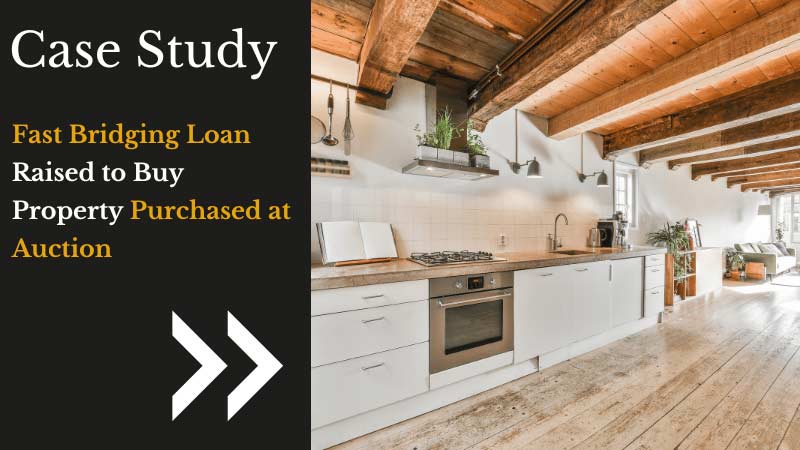
- Buy a property at auction: Fast finance is essential when buying properties at auction, as they typically have a short 28-day completion window
- Renovate or refurbish a property: Cover the costs of renovating or refurbishing your existing home, or even an unhabitable property you plan to live in
- Purchase an investment property: It is possible to use a regulated loan to buy an investment property as long as it meets the relevant criteria
- Buy a retirement home: Act as a cash buyer in a highly competitive market, as retirement properties are in high demand and often sell quickly
- Purchase a property abroad: No need to rely on a foreign mortgage - buy your new overseas property before selling your current one back home
- Fund a self-build project: Finance the construction of your dream home from the ground up, with a loan secured against your existing home
- Resolve probate issues: Access money to pay inheritance tax, funeral expenses, and property maintenance costs until probate is completed
- Pay care home costs: Many families struggle to cover care home fees, especially when it's not foreseen, and bridging provides a short-term solution
- Consolidate existing debt: Pay off existing debts with high interest rates or prevent the repossession of your property
7 Types of Accepted Security for a Regulated Bridging Loan
Due to what qualifies as a regulated bridging loan, there is a limited number of accepted securities for this type of loan:
- Freehold properties (such as houses and bungalows)
- Leasehold properties (such as flats, apartments, and maisonettes)
- Unmortgageable properties
- Semi-commercial properties
- Self-build properties (complete or in progress)
- Renovation or refurbishment projects
Unregulated Bridging Loan
What Is an Unregulated Bridging Loan?
Unregulated bridging loans are typically used for investment or commercial transactions, rather than to purchase a borrower’s primary residence. They provide fast, flexible financing, allowing property investors to make quick decisions and seize opportunities in the property market.
However, unregulated loans are not covered by the same Financial Conduct Authority (FCA) protections as regulated loans.
What Can You Use an Unregulated Bridging Loan For?
If your loan is not secured against, or for the purchase of, a residential property where you or a family member intends to live, then you will need an unregulated loan. Here are some example use cases:
- Expand an investment portfolio: Release equity from an existing investment property or commercial premise to secure another investment before the first one is sold or refinanced
- Purchase a buy-to-let auction property: As with residential auction purchases, they must usually be completed within 28 days, but a buy-to-let purchase would require an unregulated loan
- Refurbish a buy-to-let property: Fund refurbishments on a rental property you own before selling the property for a profit or refinancing onto a higher-value mortgage
- Convert a property into an HMO: Turn a property into a house of multiple occupation, where the loan could cover the purchase cost, planning permission, licensing costs, and outfitting
- Property development: Secure land and funding for the preliminary stages of building, cover costs while awaiting planning permission, or repay a construction loan when near completion
14 Types of Security for an Unregulated Bridging Loan
Unregulated bridging loans can be secured against a wider range of collateral:
- Freehold properties (such as houses and bungalows)
- Leasehold properties (such as flats, apartments, and maisonettes)
- HMOs
- Unmortgageable properties
- Semi-commercial properties
- Hotels and guest houses
- Care homes and nursing homes
- Shops and retail units
- Warehouses
- Offices
- Leisure complexes
- Farm land
- Development land
- Parking spaces
- Investment portfolios
Commercial Bridging Loans
Commercial bridging is a form of lending used by businesses to move quickly on investment purchases, refinancing, or asset repositioning, where commercial mortgages may be too slow. You would need a commercial bridging loan when the property or land used as security is wholly or partly used for business purposes, even if you are a sole trader.
Accepted security could come in the form of any property that has a business use, for example:
- Offices
- Retail units
- Warehouses
- Mixed-use buildings
- Semi-commercial properties
- Agricultural land
- Development sites
In development cases, lender appetite may depend on whether planning permission is already in place.

3 Types of Bridging Development Finance
- Property development finance: A short-term loan used to fund land acquisition, planning, and building costs, with funds released in stages to protect cash flow
- Development exit finance: A specialised bridging loan used to pay off an existing, expensive construction loan once a building project nears or reaches completion
- Mezzanine finance: A top-up loan to fill a funding gap, allowing you to take on larger property development projects while putting down a smaller deposit
Open Bridging Loan vs. Closed Bridging Loan
Closed bridging loans are repaid on a set date, while open bridging loans do not have a firm repayment date, allowing for more flexibility in repayment.
Unlike many secured loans or mortgages, bridging is built for short-term use and speed rather than repayment spread over years.
First Charge Bridging Loan vs. Second Charge Bridging Loan
There are two main types of bridging finance: first charge and second charge bridging loans.
First charge bridging loans are secured against a property that has no other loans secured on it, while second charge bridging loans are secured against a property that already has one or more loans, such as a mortgage.
First charge loans come with lower interest rates, as the lender's exposure to risk is reduced.
Find the Best Bridging Loan Deal with Clifton Private Finance
At Clifton Private Finance, our independent brokers compare bridging loans across many lenders to help you find the most favourable rates.
We have established relationships with a full range of UK bridging lenders, and we will always work to provide you with the best possible deal for your circumstances.
We can help you act with confidence in the property market and meet tight deadlines by providing fast and professional bridging loan expertise.
Get a Bridging Loan Quote
Complete the simple form to receive tailored bridging finance options.
Loading form...
If you need to move fast on a purchase, call our team on 0117 959 5094 to discuss your requirements or book an appointment with one of our experts.
You can also use our 24/7 enquiry service through live chat - contact us any time, and we’ll get back to you as soon as possible - we reply to every message!
Bridging Loan FAQs
1. Can You Get a Bridging Loan with Bad Credit?
Yes, it may be possible to get a bridging loan with bad credit. Some specialist lenders consider applicants with previous credit problems, assessing the circumstances alongside the property security and a credible repayment plan. Acceptance is not guaranteed, and income evidence may still be required depending on how interest is paid and how the loan will be repaid.
2. Do You Need a Deposit for a Bridging Loan?
You typically need a bridging loan deposit of 20-25%, however this does not need to be in the form of cash reserves. You must provide security for your loan in the form of another property or asset to keep the loan-to-value at or below 75-80%.
For example, if you're buying a £300K property with a £300K bridging loan, your loan-to-value would be 100%. Therefore, you'd need another property or asset to secure £75K of the loan against, in addition to the £300K secured against the property you're buying.
3. Can You Get 100% Bridging Finance?
You can effectively secure a 100% bridging loan for a property, but only if you have other property as security to keep your overall loan-to-value below 80%.
So, if you're getting a loan for 100% of a property value, you'll need another property in the background to secure it against.
4. Do You Pay Monthly Instalments on a Bridging Loan?
Some bridging loans require you to repay the interest accrued each month, but most lenders will give you the option to roll this up into the loan value, meaning you repay it with your lump sum at the end of the term.
It's worth noting that as soon as you pay off most bridging loans, you stop accruing interest. o, the quicker you pay it off, the less expensive it will be.
5. How Long Does a Bridging Loan Last?
Most loans that we arrange for our clients have a 12-month term. The minimum loan term is one month, so if you repay within the first 30 days, you'll be charged interest for the full month. After that, interest is only charged up to the day you settle the loan.
6. What Is the Longest Bridging Loan Term?
Regulated bridging loans (for residential properties) are typically 12 months; however, some unregulated bridging loans for buy-to-let or commercial properties can be up to 36 months.
Some lenders are more flexible on term durations than others, and it can be a case-by-case basis as to whether you'll get approval for a longer loan term.
7. Are There Early Repayment Charges on a Bridging Loan?
There are typically no early repayment charges, but some lenders may set a minimum interest period. When applicable, this is usually fixed at 1 to 3 months, where repayment is not possible. Other lenders may charge an exit fee to ensure they cover setup and underwriting costs, but this is rare.
8. Can You Get a Bridging Loan in Scotland?
Yes, it is possible to get a bridging loan in Scotland. However, there is a different legal framework when buying a property in Scotland. There are specialist lenders who cater to the Scottish property market, but you will need an experienced broker to help you obtain the loan.
9. Will a Bridging Loan Application Affect Your Credit Score?
Some bridging lenders use a soft credit search for an initial assessment, which does not affect your credit score. A hard search may be required as your application progresses. This appears on your credit report and can affect your score. The type and timing of checks vary, so confirm the lender’s process with your broker before proceeding.
Lenders assess your credit history alongside the property security, loan-to-value ratio, and repayment plan. Past credit problems do not automatically rule out a bridging loan, but they remain relevant to whether the lender can approve your application.