

Specialist
Second Charge Mortgage Service
For raising finance against your home or a buy-to-let property
Get a Second Charge Mortgage Quote
Complete the simple form to receive your tailored second charge mortgage options.
Loading form...

For raising finance against your home or a buy-to-let property
Complete the simple form to receive your tailored second charge mortgage options.
Loading form...


We provide market leading second charge mortgage solutions for UK clients.
Call us on +44 117 959 5094 to discuss your requirements, or complete the form below.
1. What Is a Second Charge Mortgage?
2. When Is a Second Charge Mortgage Suitable?
3. What Can You Use a Second Charge Mortgage For?
4. How Does a Second Charge Mortgage Work?
5. Pros and Cons of a Second Charge Mortgage
6. How Much Can You Borrow with a Second Charge Mortgage?
7. How to Choose a Second Charge Lender
8. Understanding the Loan Terms
9. Managing Your Finances
10. Why Use a Second Charge Mortgage Broker?
11. Second Charge Mortgage FAQs
A second charge mortgage is a mortgage taken out against a property with an existing mortgage secured on it. For example, if you have an outstanding mortgage on your home but want to raise additional funds, you could take out a second charge mortgage.
It’s called a 'second charge' mortgage because it will be second in line for repayment if you ever need to sell your property to repay the mortgage.
The first charge lender, also known as the first lender or first mortgage lender, must be paid first from the proceeds of the sale. Only after the first mortgage has been fully paid does the second charge lender receive any remaining funds.
This repayment order ensures the first lender maintains their priority right over the property in case of default or sale.
A second charge mortgage can help homeowners consolidate debts, raise money to make home improvements, fund home renovations, pay tax bills, or buy additional property.
Whether a second charge mortgage is suitable depends on your personal circumstances, including your financial situation, credit history, and future plans.
It’s particularly useful for those who don’t want to change their primary mortgage deal but still want to raise additional funds, especially if you want to maintain a good deal on your existing mortgage.
Similarly, if you’re currently on a low-rate mortgage, you may not want to remortgage your entire property just to raise some additional funds.
For example, if interest rates have gone up since you last fixed your mortgage rate, then you know repayments will get more expensive if you remortgage.
In this scenario, remortgaging means you would have to pay a higher interest rate on your entire mortgage loan rather than just the additional borrowing amount.
Instead, leaving your current mortgage as is and taking out a second charge against your home can protect your existing low rate while giving you access to further borrowing.
Since the new mortgage is ‘second charge,’ your existing lender will usually be happy with it, and it typically won’t increase your current rate. Your primary mortgage lender will always be repaid in the first instance (first charge), and their agreement with you is the priority when it comes to debt recovery.
A second charge mortgage might be a cheaper, consolidated option if you have various unsecured debts, such as personal loans, credit cards, and other loan types.
Because you can secure a second charge mortgage against your property, they usually have cheaper interest rates than unsecured borrowing forms.
Later down the line, consolidating your debts can also improve your future remortgaging options.
In a scenario where you have a long-term fixed rate mortgage, you may want to avoid remortgaging too early to avoid being stung by hefty early repayment charges (ERCs).
ERCs can cost thousands, so a second charge mortgage is a popular option to raise additional funds against your property without incurring such penalty charges.
If your credit score is higher now than when you took out your first mortgage, you may not want to remortgage because you could have to pay a higher interest rate on the value of your entire mortgage.
However, if you leave your current mortgage as is and raise additional finance through a second charge mortgage, you’ll only pay a higher rate on the second amount you’re borrowing.
You can use a second charge mortgage to:
Case study: Our case study below details how we arranged a second charge mortgage to secure an investment opportunity.

Second charges are additional loans secured against your property. Your primary mortgage remains intact and stays the same when you apply for a second charge mortgage.
You apply for a second charge mortgage through a mortgage lender who will assess your eligibility based on your income, credit score, and the equity you hold in the property. The lender will determine how much they are willing to lend based on your individual circumstances.
The loan amount is based on the equity in your property. As a result, you can typically borrow more at a lower rate than you can with an unsecured personal loan.
You continue to pay your first mortgage, and the second charge mortgage is repaid separately – so you have two mortgage repayments each month.
Your repayment structure will affect how quickly your loan balance decreases over time.
If you can’t keep up with your mortgage repayments and your house is repossessed, your first mortgage has ‘priority’ on being repaid with the proceeds of your house sale before the second charge mortgage.
Check out our video explaining the process of how to get a second charge mortgage:
When you’re taking out a second charge mortgage for the right reason, the pros will generally outweigh the cons by some distance.
If you’re unsure as to whether a second charge mortgage is right for you or whether you’d be better off remortgaging or choosing a different loan option, you can book a free consultation with our mortgage advisers today and ask any questions you may have.
One key advantage of a second charge mortgage is a more relaxed approach to the purpose of your loan.
Lenders will consider:
However, all lending decisions are subject to the specific lender's assessment and eligibility requirements.
There’s also a more relaxed criteria on your Loan to Income ratio (LTI), and lenders will often let you borrow more than 4.5 times your income (up to 6 times in some cases).
Another key benefit is that completions are much quicker for second charge mortgages than full remortgages (on a case-by-case basis), so if you need the funds faster it can be a preferable option.
It's important to remember that a second charge loan is secured against your home, so if you fail to keep up with repayments, your property could be repossessed.

You can generally borrow up to 100% of your total loan to value with a second-charge mortgage.
It’s calculated as your total loan-to-value (LTV) across both of your mortgages.
To qualify, you must have enough equity in your property, as lenders require a certain level of ownership value before approving a second charge mortgage.
And remember that the higher your overall loan to value ratio, the higher your interest rate will be.

Using a second charge mortgage for debt consolidation is one of the major uses for a second charge.
Say, for example, you have an unsecured personal loan, some credit card debt and a car loan outstanding - it’s possible to take out a second charge mortgage on your property to pay off all these other debts.
Because second-charge mortgages are secured against your property, the interest rates are generally much lower than other forms of debt, such as unsecured personal loans. This is because your lender has the security of your house to fall back on in case you’re unable to keep up with your repayments. It’s less risky for them, so they can afford to offer you a cheaper rate. So you can save money in the long run.
It can also make repaying your debt easier because you only have one repayment to worry about monthly, and it’s easy to keep track of.
It can also make remortgaging easier later on because you only have one other form of debt (your second charge), which looks cleaner on your credit profile to lenders. Additionally, consolidating debts with a second charge mortgage and making regular repayments can help improve your credit rating over time.
Another popular use for second charge mortgages is to finance home improvements.
These loans are also commonly used to fund home renovations, making them ideal for significant projects that require substantial investment. For example:
The criteria on what you can spend money on from a second charge are much wider than first charge mortgages or other types of loans - so there's plenty you can do with your home to improve your living space or increase its value.
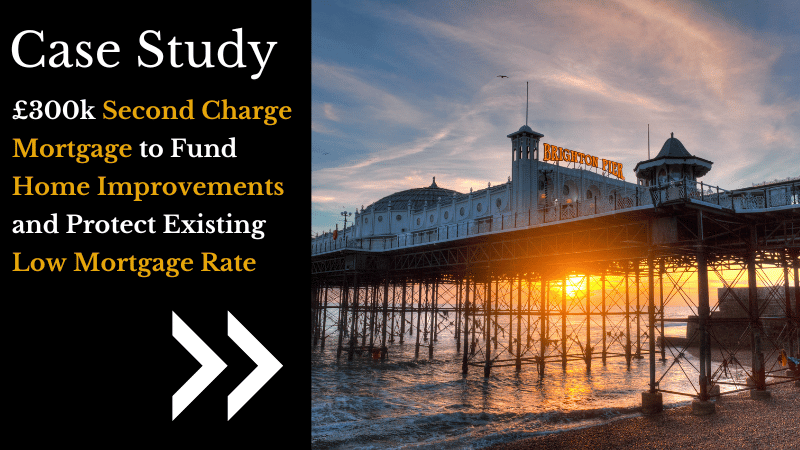
Case study: Read our case study below on how we secured a £300k second charge mortgage to fund home improvements
When it comes to securing a second charge mortgage, selecting the right charge lender is a crucial step in the process.
Not all lenders are the same, and the terms they offer can vary significantly. A charge lender provides a secured loan against your property, so it’s important to choose one that aligns with your individual circumstances and overall financial situation.
Remember, a second charge mortgage is a secured loan, so your property is at risk if you fail to repay.
Take the time to understand the lender’s requirements and ensure you’re comfortable with the process before committing. By carefully choosing your charge lender, you can secure a deal that supports your goals and protects your financial wellbeing.
Start by researching different charge mortgage providers and comparing their interest rates, loan terms, and associated fees.
Look for lenders with a strong reputation for customer service and a straightforward application process. Reading reviews and seeking recommendations can help you gauge the quality of service you can expect.
It’s also wise to consider how flexible a lender is when it comes to your specific needs. Some may offer more favourable terms based on your credit profile or the purpose of your loan.
Consulting with a specialist mortgage broker can be invaluable, as they can help you navigate the options and negotiate the best deal for your situation.
Before you commit to a second charge loan, it’s essential to fully understand the terms and conditions set out by your charge mortgage provider.
Key elements to review include:
These factors will determine how much you pay each month and the total cost of borrowing over time.
Be sure to check for any early repayment charges, which can apply if you decide to pay off your charge loan ahead of schedule. These fees can sometimes offset the benefits of early repayment, so it’s important to factor them into your decision-making process.
The terms you’re offered may depend on your credit history, so it’s a good idea to review your credit report before applying. A strong credit history can help you secure a more competitive interest rate and better overall deal.
Always read the loan agreement carefully and don’t hesitate to ask your lender or broker to clarify anything you’re unsure about.
Taking out a second charge mortgage means you’ll have an additional monthly payment to manage alongside your existing mortgage.
It’s vital to assess your finances carefully to ensure you can comfortably afford both repayments, as well as any other debts or financial commitments you may have.
Start by reviewing your income and outgoings to create a realistic budget. Factor in the new monthly payments to your second charge lender and look for areas where you might be able to reduce expenses or consolidate other debts. This can help free up more money each month and make your overall financial situation more manageable.
If you’re using your second charge mortgage to raise funds for a specific purpose, such as home improvements or consolidating debts, make sure you have a clear plan for how the money will be used.
Responsible borrowing and timely repayments are key to maintaining a healthy credit profile and avoiding further debt.
Remember, your property is at risk if you fail to keep up with repayments on a charge mortgage.
By managing your finances effectively and staying on top of your payments, you can make the most of the opportunities a second charge mortgage offers while protecting your home and financial future.
Homeowners who take a proactive approach to budgeting and debt management are best positioned to benefit from this type of property finance.

It’s common to use a mortgage broker, like Clifton Private Finance, when you’re thinking about a second charge mortgage.
Our expert brokers will take the time to understand your goals and circumstances, whether that's debt consolidation, home improvements, or something else entirely.
We will then use our fully independent, whole-of-market approach to provide tailored solutions to meet your needs.
Here are a few reasons why our clients trust us:
We are highly experienced in sourcing the best second charge mortgage deals for our clients, with established relationships across the full UK lending market. This means we can help you find and compare options, including from private banks and specialist lenders that do not deal directly with consumers.
Your dedicated broker will determine whether a second charge mortgage is truly the best option for you, or if another type of finance may more suitable for your scenario. We look at your situation and use our expertise to provide you with the best advice.
Once it has been decided that a second charge mortgage is a suitable product for you, your dedicated broker will support you in gathering all of the necessary documentation to support you application. Our experience means that we know how to present different circumstances in the best possible light.
We also know exactly how to package an application when its submitted, so that the lender's administrative overhead is reduced and the approval process is streamlined. This reduces delays and ensures that your application for second charge finance runs as smoothly as possible.
Once your application is submitted to the chosen lender, your dedicated broker will regularly check on its progress and chase it through the system to make sure that any unnecessary delays are avoided.
Acting as your single point of contact, we will work to have your finance released as quickly as possible, while taking the stress and uncertaintly out of the situation.
To see what we can do for you, complete our quote form or book a free consultation below.
Yes, second-charge mortgages are regulated by the FCA (Financial Conduct Authority), just like standard mortgages.
It is possible to have multiple second charge mortgages, but the interest rates will be higher the more loans you secure against your property.
The process typically takes 4-6 weeks and involves a property valuation, credit check, and legal paperwork. However, depending on the case, we can often secure second charge mortgages in 2-3 weeks.
Your lender can repossess your home and sell it to recover their debt. Legal action may also be taken to recover the outstanding amount.
When the property is sold, the proceeds are used to pay off the debts in order of priority. Your first mortgage will be paid first from the sale proceeds, and only after that will your second charge mortgage be paid.
Yes, you can, but it depends on the lender you use. Some lenders allow a second charge mortgage to be used for business purposes or any personal use, and they're more relaxed on your spending in general - but it depends on your lender's criteria. It's a good idea to seek professional advice to find a suitable lender.

If there were 10 stars, I would give them. Excellent, efficient service, got the best rates available o n the market. Nick Kerley was brilliant throughout the whole process, I would definitely recommend Clifton Private Finance and 100% use them again.

I had the pleasure of working with James Ellacott on brokering my commercial mortgage. James and his team delivered outstanding service throughout the entire process—always quick to respond to my requests and consistently going the extra mile to help me secure additional funding. I highly recommend them.

We did NOT have an easy time getting a mortgage for our recent home purchase, but Patrick went above and beyond in finding a lender and navigating their seemingly endless barrage of requests and delays. He'll be our first call in two years when we need to remortgage.