











Categories
Complete Guide to Fixed vs. Variable Rate Mortgages

Understanding how rates work when you get your mortgage or remortgage can save you hundreds (or even thousands) of pounds a year. However, because it’s couched in confusing terms and a little jargon, it’s understandable that many borrowers simply avoid the complexity.
At Clifton Private Finance, we’re here to dismiss the confusion and unlock the saving potential that can be yours through a better understanding of what’s meant by fixed and variable rates.
Mortgage Interest Rates - The Basics
Mortgage interest rates determine the cost of your mortgage. Like any borrowing, the lender is looking to make a return and it’s through the interest rate that they do that. A higher interest rate means you are paying more for your mortgage and they’re making more money.
However, it’s not just the lender who determines the rate. The Bank of England Base Rate is the standard interest rate applied across the country, representing the interest the banks pay when they borrow money from each other, and most mortgage rates are based on it. As the base rate goes up and down based on market conditions, affected by international politics, inflation, and a whole host of other variables, it’s impossible to accurately predict. That’s why some years your mortgage will feel cheap, while other times it is expensive.
- Base rate is high - Borrowing is more expensive for everyone, so expect to pay more for your mortgage, though you will get better interest on your savings.
- Base rate is low - Borrowing is more cost-effective, your mortgage is cheaper but your savings aren’t doing much.
Mortgage lenders won’t lend you money at the base rate itself - they need to apply a margin to make a profit. Mortgage rates will be a little above the base rate to provide the banks and other lenders with a return on their investment - but how much depends on the type of mortgage.
Fixed vs. Variable Rates
A fixed rate is set for an agreed period, or term. This means that for the length of the term, it will not go up or down, no matter what is going on with the base rate.
A variable rate will change over the term, rising and falling as market conditions change and the base rate fluctuates.
Fixed rates are often easier for borrowers as they help keep your monthly mortgage repayments the same - that predicability is worth a lot when you are trying to budget. Variable rates trade some of that stability with more flexibility and the benefit that if the base rate drops, you could save on your mortgage repayments. Of course, the reverse is also true, with larger payments coming when the rate increases.
Mortgage Terms vs. Mortgage Lifetime
Though your mortgage has a lifetime - for example, 25 years - it is very rare for it to simply remain as the same product throughout that lifetime. Instead, a mortgage should be seen as a series of shorter mortgage terms, each with their own rates and conditions. When each term ends, it’s wise to re-evaluate the mortgage, moving to a different mortgage with a product transfer, or remortgaging with another lender to get a better deal.
If a mortgage term ends without being re-evaluated, it will move onto the lenders Standard Variable Rate (SVR), a variable rate that is typically higher than other available options.
Consider the following illustration of a 25-year mortgage journey:
25-year Mortgage Lifetime
|
Year |
Term |
Comments |
|
1 to 2 |
2-year fixed |
New borrowers often choose shorter fixed terms while they settle with their mortgage. |
|
3 to 5 |
3-year fixed |
With the original fixed rate come to a close, a new fixed rate period is chosen to keep stable and predictable monthly repayments. |
|
6 to 10 |
5-year tracker |
Rates have dropped in the preceding years and the previous fixed rate was stuck higher for some time, so a variable tracker mortgage is chosen for the next five years to better match the base rate. |
|
11 |
SVR |
A busy life and other commitments meant the mortgage slipped on to the more expensive SVR for a year before being remortgaged. |
|
12 to 14 |
3-year fixed |
With rates on the rise, a 3-year fixed rate remortgage is selected to maintain stability after the chaotic SVR year. |
|
15 to 19 |
5-year discounted SVR |
With a good offer available, a discounted SVR mortgage represents the best rate. |
|
20 to 21 |
3-year fixed |
Rates have dropped and some excellent 2 and 3-year fixed offers exist for the savings for borrowers with low loan-to-value. |
|
22 to 24 |
3-year tracker |
The final years are met with a tracker mortgage as rates continue to drop slowly. |
|
25 |
SVR |
With a single year left, the cost of interest is minimal. The mortgage is allowed to drop onto SVR for the last year to avoid the administration of a remortgage. |
Over the lifetime of a mortgage, most borrowers move through a range of different mortgage products and lenders, each time selecting the arrangement that will be most cost-effective and flexible based on their changing circumstances. At Clifton Private Finance, our mortgage advisors will help you look at your options to make the best decision at each stage.
Fixed Rate Mortgages
Fixed rate mortgages are valued by those looking for a simpler mortgage that meets a consistent budgeting requirement. As the repayment is the same each month, it is easy to account for and can be effectively forgotten about to run in the background. Borrowers with fixed rate mortgages feel they can distance themselves from rate-based news and wider economic concerns - at least until the time comes to arrange for a new fixed rate term or look at other remortgage options.
First time buyers are often keen to take a fixed rate mortgage as it best mirrors paying rent - something they’ve been used to for years.
However, fixed rate mortgages also mean you do not get any advantage when the base rate drops. A 3-year fixed rate mortgage set to 5%, for example, remains at 5% for those 36 months, even if the base rate drops to 2% in the meantime. For this reason, fixed rates are best used when rates are low and likely to rise, and less enticing when rates are higher and hopes are they will drop.
One other consideration of fixed rate mortgages is the Early Repayment Charges (ERC). These fees may be applied if you repay or switch your mortgage before the term ends, and can add a significant cost to any remortgage or overpayment strategy. They typically reduce over time.
This is why it's important to make sure you fully understand the details of your mortgage agreement if you decide to fix your rate.
How Long Does a Fixed Rate Mortgage Last?
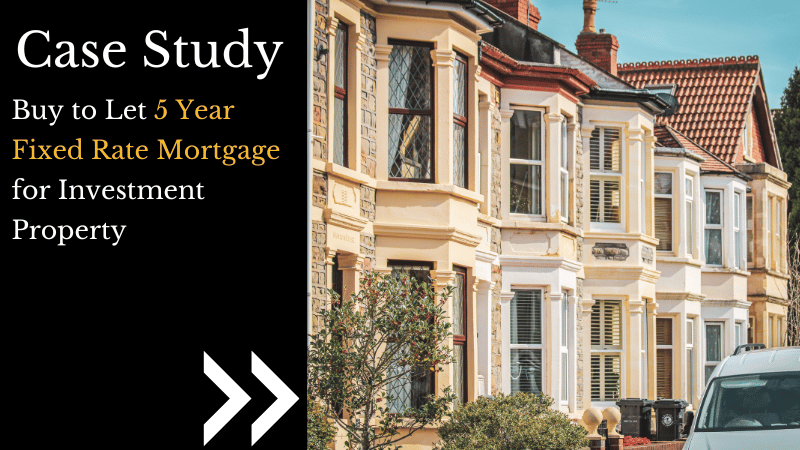
A fixed-rate mortgage offers a set interest rate for a defined term.
People typically choose to fix their mortgage rate for a two-year or five-year term.
Three-year and ten-year terms are available from some lenders, but these are less common.
In practice, this means that for those years, your monthly repayments will not change; they are calculated based on the set rate for the duration of the term.
What Happens at the End of a Fixed Rate Term?
When the term ends, you’ll automatically move onto your lender’s Standard Variable Rate (SVR) unless you arrange a new deal or remortgage.
For some borrowers, the end of their fixed rate term can also result in a slight panic. This occurs when rates have risen sharply in the background as happened during the September 2022 mini-budget. At that time, borrowers coming off low fixed rates faced a sudden shock to their mortgage rate, with some seeing their monthly mortgage repayments almost double. While variable-rate borrowers were already paying more during that period, their costs rose more gradually, so the impact felt less severe.
Fixed Rate Mortgages Pros
- Predictable monthly repayments
- Easier to budget
- Protected against rate rises
- Miss out potential savings if rates fall
- ERCs penalise early remortgages or overpayments
- Potential for end-of-term shock
Fixed Rate Mortgages Cons
- Miss out potential savings if rates fall
- ERCs penalise early remortgages or overpayments
- Potential for end-of-term shock
Tracker Mortgages
A tracker mortgage is a type of variable-rate mortgage that follows the Bank of England Base Rate, with an additional fixed margin - they track the base rate. A tracker mortgage is always a certain percentage above the base rate and, as the base rate rises and falls, so too does your mortgage rate and the monthly repayment.
For example, you could get a tracker mortgage that will always remain at 0.75% above the base rate:
- When the base rate is 4.0%, a +0.75% tracker mortgage would result in a mortgage rate of 4.75%
- If the base rate drops to 3.5%, that same tracker mortgage rate would be 4.25%
- Should the base rate rise to 5.25%, the tracker mortgage rate would be 6%
Consider the effect on a 25-year mortgage of £400,000, compared to a fixed rate of 5%:
Tracker vs. Fixed Rate
|
Base Rate |
+0.75% Tracker Repayment |
Difference |
|
| 3.75% |
£2,223 |
£2,338 |
- £115 |
| 4.0% |
£2,280 |
£2,338 |
- £58 |
| 4.5% |
£2,397 |
£2,338 |
+ £59 |
| 5.0% |
£2,516 |
£2,338 |
+ £178 |
| 5.5% |
£2,639 |
£2,338 |
+ £301 |
If the base rate drops, which occurs during times of low inflation, the tracker mortgage outperforms a similar fixed-rate product, leading to savings each month. However, should the base rate rise, the tracker mortgage can become more expensive than the fixed rate. Most tracker mortgages also come with a ‘collar’ rate - a minimum level below which the rate cannot fall.
This protects the lender from very low or negative interest rates.
Like fixed-rate mortgages, tracker mortgages have a set term and may include early repayment charges, though these tend to be slightly lower. When the term ends, the tracker mortgage should be transferred onto a new product or remortgaged to avoid moving onto the lender’s SVR.
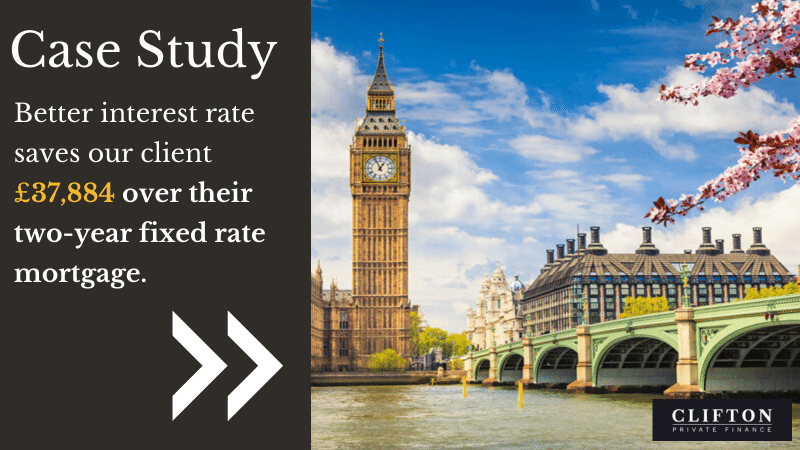
Case study: Read our case study below detailing how we saved our client over £37,000 by switching lenders on their mortgage
Tracker Mortgages Pros
- Lower starting rates - Tracker mortgages often begin slightly cheaper than equivalent fixed deals.
- Potential for savings when rates fall - Tracker mortgages can offer savings when the economy stabilises.
- Rate transparency - Because tracker mortgages are linked directly to the base rate, changes are easily understood.
- Rise with the base rate - Tracker mortgages are exposed to the wider economic situation.
- Minimum (‘collar’) rates - Lenders set a floor to limit how low the rate can fall.
- Harder to budget - As with all variable rates, tracker mortgages are harder to plan around.
Tracker Mortgages Cons
- Rise with the base rate - Tracker mortgages are exposed to the wider economic situation.
- Minimum (‘collar’) rates - Lenders set a floor to limit how low the rate can fall.
- Harder to budget - As with all variable rates, tracker mortgages are harder to plan around.

Standard Variable Rate (SVR) Mortgages
The lender’s Standard Variable Rate (SVR) is an internal rate, specific for each lender. While many lenders do follow base rate changes to set their SVR, there is no obligation nor oversight for them to do so. SVRs can be:
- Significantly more expensive than other rates
- Changed at any time
- Not aligned with other lenders
While the base rate has defined times for adjustment (eight times a year, approximately once every six weeks), the lender’s SVR may remain static for many months and alter at no notice. This makes it an unpredictable rate that cannot be easily factored into budgeting.
Note that SVRs are lender specific - they are under no obligation to meet a similar SVR rate of another lender. Thus, one lender’s rate may be significantly more expensive or cheaper than another.
In most cases, lenders don’t really expect borrowers to take out basic SVR mortgages - they are seen as a fallback position for the period when your previous mortgage term ends and you are yet to select a new rate. However, there is one advantage to having an SVR mortgage - flexibility.
Unlike other mortgages, SVR has no set term and no ERCs. You can renegotiate at any time and moving to an alternative rate won’t incur any charges. This gives SVR mortgages a relaxed quality, with no time pressure to jump to an alternative. You can compare the market for the best remortgage rates and terms to suit you and move as soon as you are ready.
SVR Mortgages Pros
- Complete flexibility - You can switch, remortgage, or repay in full at any time without ERCs.
- No renewal deadlines - Not tied to a fixed term, SVR offers breathing room while you explore the market at your own pace.
- Simple fallback option - If your fixed rate or tracker deal ends, you automatically move onto the SVR without risk of losing your mortgage.
- Highest rate- SVRs are typically more expensive than other deals available.
- Unpredictable - With no direct connection to the base rate, the rate can rise or fall at any time.
- Varies by lender - Each lender sets their own SVR, irrespective of headline market rates.
SVR Mortgages Cons
- Highest rate- SVRs are typically more expensive than other deals available.
- Unpredictable - With no direct connection to the base rate, the rate can rise or fall at any time.
- Varies by lender - Each lender sets their own SVR, irrespective of headline market rates.
Discounted SVR (Discounted Variable Rate Mortgages)
Some lenders offer a discounted SVR mortgage or discounted variable rate mortgage - effectively a temporary discount on their Standard Variable Rate (SVR).
This is a mortgage rate that is aligned with their SVR adjusted for a fixed discount. For example, SVR -1.5%, which maintains a rate equal to one and a half percentage points below the SVR.
Discounted SVR is often confused with tracker mortgages, as they can display similar rates and both have a variable component. However, there are some key differences:
- Because discounted SVR is based on the lender’s SVR, the rate is less transparent
- Discounted SVR does not follow the base rate
- Lender controls both the rate (based off SVR) and the discount period
In circumstances where the SVR is competitive, a discounted SVR term can be cost-effective. However, it is important to understand that the lender can raise SVR without notice, making discounted SVR mortgages less reliable than other options.
Discounted SVR Mortgages Pros
- Potential for competitive rate - Lenders can offer enticing discounts to encourage borrowers.
- Flexibility for remortgaging - ERCs are lower and rarer than with fixed rates, making discounted SVR rates useful as an interim option.
- Good value in stable markets - When the SVR is steady, discounted variable rates can save compared to trackers and fixed rates.
- Rate can be unpredictable- Lenders can raise the rate at their discretion.
- Potentially confusing - Lack of connection to the base rate and use of ‘discount’ wording can lead to borrower mistakes.
- Short-term advantage - Discount periods may be short, moving afterward onto non-discounted SVR rates.
Discounted SVR Mortgages Cons
- Rate can be unpredictable - Lenders can raise the rate at their discretion.
- Potentially confusing - Lack of connection to the base rate and use of ‘discount’ wording can lead to borrower mistakes.
- Short-term advantage - Discount periods may be short, moving afterward onto non-discounted SVR
Are Interest Rates Going to Rise or Fall in 2026 and Beyond?
There is no way to be certain which way future interest rates will trend in the UK. However, many interest rates currently on the market are the lowest we have seen since 2022. many economists believe that rates will drop in the near future.
The Bank of England's base rate stance is one of gradual reduction, with the rate cut to 3.75% in December 2025 as inflation eased. Many economists believe that further cuts are expected in 2026, as long as price pressures continue to fall towards the 2% target, balancing economic growth with inflation control.
Many homeowners whose fixed rates are ending this year are likely to find appealing mortgage products, easing the pressure on households across the UK.
But what about over the next few years? Is it worth fixing for 3-5 years now?
What Do Our Experts Say?

George Abouzolof
Senior Finance Broker CeMAP
In March 2026, the Bank of England has decided to hold the base rate at 3.75%, following a drop from 4.00% in late 2025.
A further drop to 3.5% had previously been expected, however the outbreak of the war on Iran has had a significant impact on global energy markets. As a result, rate setters have decided to act more cautiously.
Mortgage borrowers may see some lenders increase rates very slightly in the short term, but the Bank of England's stance is to continue cutting the Base Rate through 2026, which will likely ease borrowing rates in the longer term.
Fixed and Variable Rate Mortgages with Clifton Private Finance
Making the decision between fixed and variable rates is balancing predictability against flexibility. When you choose a fixed rate mortgage, you set a rate and your monthly repayments for the next few years to come, but by doing so, are locked in through early repayment charges until the term ends.
Variable rates give you far greater flexibility, allowing you to explore the market to make the most of your property investment in exchange for a little less stability.
Our team of mortgage advisers at Clifton Private Finance are here to help you evaluate your needs and make a decision on the structure of your mortgage to fit your present circumstances. We compare mortgage products from the full spread of UK lenders, including both traditional banks and specialist lenders. Together, we can look at the specific pros and cons of fixed rate, tracker, and discounted SVR mortgages to find the best for your income and personal risk tolerance.
Whether you’re a first-time buyer looking for stability or an established landlord expanding your buy-to-let portfolio, Clifton Private Finance can help. Book a consultation today.