











Categories
How to Buy an Abandoned House
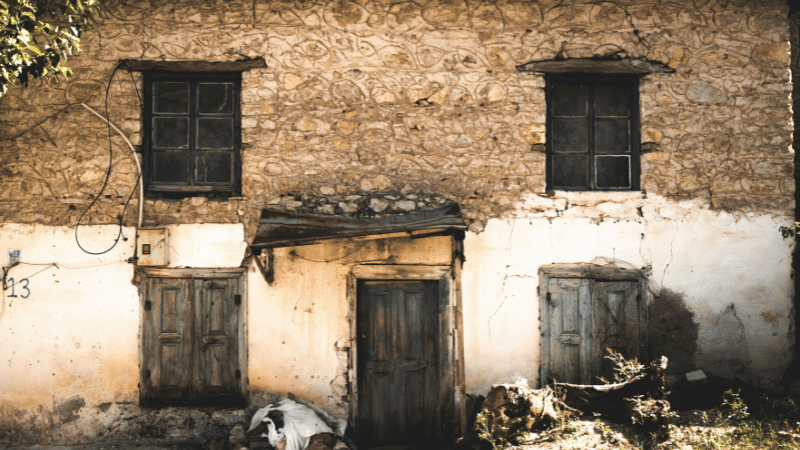
There are now more than 700,000 empty homes in England, and many of these neglected dwellings have been abandoned by their owners.
Whether a tatty town centre terraced or a forgotten farmhouse, these forlorn properties offer huge potential for an opportunistic homebuyer or a property investor looking to sell on at a profit or rent out as a long-term investment.
There’s plenty of buyer demand for renovated houses put back on the market with all mod cons, whether as a sale or rental, as housing is in such short supply.
If all the empty property in England was brought back to residential use, it would fill half the government’s housing target of building 1.5m new homes by 2030.

Here’s all you need to know about tracking down the owner of an abandoned house, securing planning permission to transform a neglected property into a modern home, and how a bridging loan will turn you into a cash buyer able to purchase immediately, before anyone else snaps it up.
Key Takeaways
- Cheap purchase price: An abandoned house will never be in tip-top condition, so you’ll be looking at paying a lot less than you would for a prime home in the same location.
- Empty property is a blank canvas: Renovating an abandoned house might be daunting, but it allows the new owner to customise it to their taste and install modern benefits such as energy efficiency.
- Investment opportunity: There’s lots of scope to make money on an abandoned property as you’ll be buying cheap. You can sell at a profit or rent out.
- Everyone benefits: Often a property is abandoned due to an inheritance dispute. If you purchase, it’s offloaded in favour of all the beneficiaries of the will.
- Improving the community: Taking over an abandoned house and giving it a new lease of life will benefit the local surroundings and help uplift surrounding property values.
Why are Empty Properties on the Rise?
Vacant properties won’t all be abandoned, but as the cost of living bites and the economic climate remains uncertain, it’s likely we’ll see more empty homes over the next few years, not fewer.
Housing campaign group Action on Empty Homes puts the number of ‘empties’ even higher, at more than 1 million, taking into account second homes which are never or barely used and properties left in limbo after the owner has died, for example.
More than a third of these – that’s 264,884 – were described as long-term vacant dwellings, usually classified as having stood empty for at least six months.
Where are the empty homes hotspots?
The Southwest and London are England’s empty homes hotspots. In the capital, one in 37 homes is classed as ‘out of use’, in Devon, Cornwall, Dorset, Gloucestershire and Wiltshire, it’s one in 34, according to Action on Empty Homes.
How can I find Abandoned Houses?
You may already have spotted a house that looks abandoned in your neighbourhood. Or you may have driven through an area and glimpsed a potentially abandoned property full of potential.
Boarded-up windows, an overgrown garden, or broken roof tiles and guttering are all telltale signs.
It won’t be immediately obvious who the property belongs to, so you will have to use detective skills. Put a polite note through the letterbox, just in case the owner does visit. Knock on neighbouring doors, or ask in the local pub, corner shop or Post Office to find out if anyone has any clues.
If you’re targeting a certain area, register with local estate agents. Abandoned properties don’t often come up for sale on the open market, but you can ask estate agents to alert you if they know of any abandoned houses nearby.
Such blighted abandoned properties may be disposed of by local authorities at auction. Also check the ‘unsold lots’ of property auctions. Abandoned homes are often left on the shelf because bidders think they will cost far too much money to renovate.
Local authorities may have an empty homes officer whose job it is to identify long-term vacant homes. If the owner can be found and wants to make a sale, the officer may operate a scheme which hooks up seller and potential buyers. It’s worth enquiring.

Another possible route is through specialist websites such as Landlister and Property with Potential which showcase abandoned and derelict properties available for sale.
Interestingly in Japan, where more than 9 million homes are said to stand abandoned, tech companies are deploying a combination of satellite imagery and artificial intelligence to locate them, using technology to pinpoint give-away signs, such as ageing roofs and rusting metalwork. There’s no sign of this coming to the UK as yet but watch this space.
Why is Defining an Abandoned House so Difficult?
One of the challenges of trying to buy an abandoned house is that there is no clear legal definition of what it means, nor one single law that can be applied.
The owner may have died without leaving a will or traceable descendants, or moved abroad and left the property behind, or the building has been repossessed following mortgage arrears and for whatever reason, never sold on.
How to finance the purchase of an abandoned home?
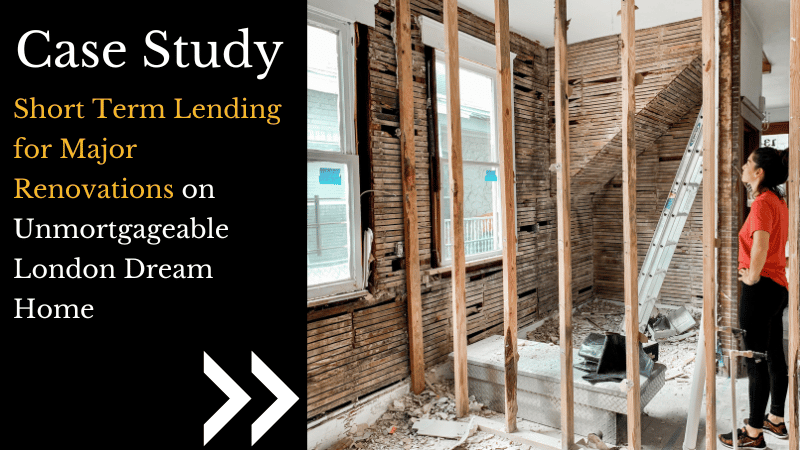
Abandoned homes are unlikely to be mortgageable through a high street lender, especially if they lack basic amenities such as a working bathroom and kitchen. Unless you’re a cash buyer you will need a tailored product such as a bridging loan, or in rare cases a specialist renovation mortgage, to complete your purchase.
The local authority may provide cash grants or loans to help owners of empty properties make improvements. Qualifying terms and amounts of funding vary, but it’s worth making an enquiry.
When the abandoned property is eventually turned back into a home, as long as all legal obligations such as planning permission and building regulations are met, you should be able to go ahead and take out a standard mortgage if required.
Is it worth buying land which comes with an abandoned property?
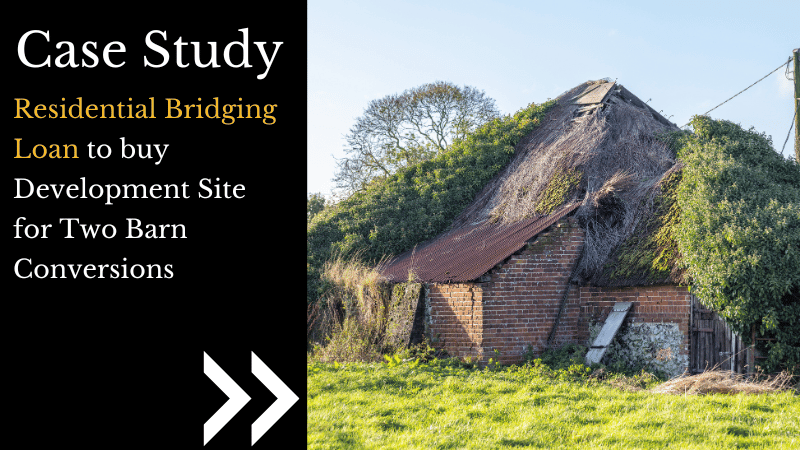
Yes, because you may find that the price is more reasonable than it would be if there was no property already on it. Some land buyers – typically those looking for a self-build plot – might be put off by the presence of a derelict and abandoned house on the site.
Extra costs would be incurred either renovating or demolishing the building. If you buy land with the property, you might be able to renovate and sell on part of the plot.
Are derelict properties always abandoned?
The government defines ‘derelict’ as “abandoned and unoccupied buildings in an advanced state of disrepair i.e. with unsound roof(s)”.
But it’s not always the case that being derelict means it’s abandoned. The owner could be ill in a long-term hospital, or even living in one room.
Be aware that to reinstate residential use will require negotiation with the local planning authority.
How do I find out if a property is abandoned or not?
The first step is to find the owner, if they’re still alive and it is possible. If this fails, you will need to establish if the property has ever had a registered owner at all. You can check this with HM Land Registry.
More than 85 per cent of property and land in England and Wales is registered with HM Land Registry, which is seeking compulsory registration of all titles by 2030.
However, much of the property and land owned by the Crown, the aristocracy, and the Church has not been registered, because it has never been sold.
Before seeking legal advice you can do your own detective work to track down owners of unregistered property says HM Land Registry.
- Research adjoining registered properties for clues, they may refer to deeds or documents which affect adjoining land and include names of owners on specific dates.
- County or local authority records may also hold clues. You will find their contact details online. Check with the local authority to see if any planning applications have ever been submitted.
- By law, applicants have to sign and date a planning application. Also inspect the electoral register for information about who last lived at the property.
How Easy is it to get Planning Permission for an Abandoned Property?
Securing planning permission to improve and extend an abandoned property can be a complex business, warn the planning experts at Cheffins estate agency.
The first step is to clarify the ‘use’ of the building as residential. This is done through the local authority. You will need to obtain an approved Certificate of Lawful Existing Use for Class C3 (residential) use, typically costing £298. This is then used as a basis to apply for planning permission.
If in the end, you purchase an abandoned house and then discover that renovation would be too impractical or costly, forcing a decision to demolish the property, this Certificate will also enable you to apply for planning permission to erect a replacement dwelling.
How to finance your purchase of an abandoned house
Bridging loans are a key part of purchasing an abandoned house because mortgages, including renovation mortgages, are largely not possible for uninhabitable properties.
If you already own a property, or are an investor with a portfolio, you can secure a bridging loan against these assets to act as a cash buyer when making your offer to buy an abandoned house.
Depending on the LTV (loan-to-value) you may even be able to cover the property refurbishment costs of the entire project with your bridging loan.
Secure Your Bridging Finance with Clifton Private Finance
At Clifton Private Finance, we’re experienced in finding you the best possible bridging finance suitable for heavy refurbishment projects.
Our fully independent, expert brokers will talk with you to understand your specific circumstances and advise you on which lender makes the most sense.
Many specialist bridging loan lenders can only be approached through broker intermediaries. We have strong, established relationships with expert bridging loan lenders across the whole UK market.