




Categories
Business Loans for Cash Flow: How Finance Can Ease the Pressure

Maintaining efficient cash flow is a challenge for all businesses. Unexpected events, seasonal peaks and troughs, and customer payment delays can all put a strain on capital liquidity, making you feel as if you’re fighting a tide of outgoings that you don’t have the means to meet. A business loan for cash flow meets those challenges.
By providing a cash sum repaid over a short-to-medium term that matches your circumstances, business loans plug the gap in your immediate working capital and support business continuity.
At Clifton Private Finance, we specialise in getting you cost-efficient lending that is tailored to suit your needs. We work with you to assess the cause of your cash flow pressure and structure a solution that is the best fit.
With access to the whole UK lending market, we can help you get the short-term finance you need to smooth your cash flow.

What is a Business Loan for Cash Flow?
When looking to resolve specific cash flow complications, it is important to get a loan that meets your true needs.
This means:
- Understanding the size of the loan needed
- Determining term length by evaluating repayment stress on future cash flow
- Minimising costs and fees
- Considering revolving credit facilities
Loan Sizes
The maximum size of the loan available will depend on several factors, including:
- Business size and turnover
- Business credit rating
- Secured or unsecured
- Business sector
- Existing debt obligations and DSCR (debt service coverage ratio)
- Loan use
- Typical business working capital loans range between £10,000 (unsecured) through to £500,000+ (secured).
At Clifton Private Finance, we will look at your full business profile, helping you obtain the loan you need by matching you to the right lender.

Term Length and Repayments
Traditional business loans for cash flow are lump-sum term loans, structured with a set amortising monthly repayment that includes a capital repayment and interest portion. A balance must always be made between term length and repayment size, ensuring that the loan does not put too much stress on monthly finances.
When looking at a loan to cover cash flow needs, it may be beneficial to explore short-term options with higher repayments to clear the debt sooner. Longer cash flow loans, especially those to solve seasonal difficulties, can become a burden on future cash flow that creates an unwanted cycle of debt.
Your Clifton Private Finance business loan adviser will discuss the repayment structure to help you balance immediate vs. future needs.
Costs and Fees
Business loans are a product provided by a lender to you as a borrower, for which the lender makes a profit. For traditional business loans, this profit is obtained through fees and interest.
Fees are single cost additions, such as arrangement fees, that are added onto the loan balance, while interest is added as a percentage-based rate, typically calculated daily and applied monthly to the balance.
While low headline interest rates can be enticing, it is important to calculate the full cost of the loan over the term, integrating fees and interest to understand the true cost of the loan to the business.
Each lender will offer a loan with its own interest rate and fees.
These are based on lender risk and underwriting, and will be affected by:
- Business credit rating - a stronger rating indicates a lower risk to the lender, reducing interest rates.
- Securities - secured (or asset-based) loans are lower risk, represented in cheaper rates.
- Business sector - lenders use supporting data like your business sector to underwrite loans, reflected in interest rates and fees.
- Lender appetite - different lenders will have individual considerations that help determine their costs.
At Clifton Private Finance, we compare cash flow loans from a wide range of UK lenders, assessing the full cost of the loan so you can make an informed decision.
Lump-Sum vs. Revolving Credit Facilities
While the majority of short-term cash flow loans are traditional lump sum loans, revolving credit facilities offer cash flow support for longer-term needs, providing you with an ongoing line of credit that can be used when needed and repaid flexibly.
Interest is only charged on the amount drawn against the credit facility, efficient for cash flow needs where a lump sum loan may generate unwanted interest on a partial balance sitting in reserve.
Revolving credit facilities are best known in the form of credit cards and overdrafts, though these are often high-cost. Dedicated, secured business lines of credit can be arranged at a more competitive rate, providing you with the familiar flexibility in a purpose-aligned structured facility.

Secured vs. Unsecured Business Loans for Cash Flow
One of the most important considerations for business owners and financial officers seeking cash flow finance is exploring the advantages and disadvantages of secured and unsecured loans.
- Secured loans, also called asset-based loans, provide collateral (assets) to the lender. These can be sold if repayments aren’t made, offering a secondary guarantee that shifts some of the burden of risk from the lender to the borrower.
- Unsecured loans are provided based on an analysis of previous financial management, primarily through the business credit rating. These are riskier to the lender.
Lenders price loans according to risk. For lenders, lowering risk leads to:
- Higher levels of acceptance
- Lower rates of interest
- Larger loans
While it is typically beneficial for a business to look to asset-backed business finance where possible, an informed decision is always essential.
Directors’ Guarantees: A Form of Security for Unsecured Business Loans
One misconception is that an unsecured loan is risk-free for the borrower, especially in the context of a limited company structure. One of the defining aspects of a limited company is that liability does not transfer from the business to its owners, it makes sense that a loan the business takes out is not the owners’ responsibility should the business fail.
This is a document that says that the director takes on personal responsibility for the loan should the business be unable to meet its repayment obligation. A director’s guarantee is often further secured through those director’s assets, often the family home.
In many cases, this means that an unsecured business loan effectively contains a secured personal loan within its structure. It also means that the director’s personal credit ratings may affect eligibility.
Your Clifton Private Finance business adviser will make sure you are fully aware of any potential personal guarantees associated with your business loans and help you explore all options equally.
Assets for Collateral
A second misconception is that secured business loans require property to use as collateral. While property is a stable asset that facilitates low-cost business funding, there are many other assets that lenders will accept for use.
Traditional secured business loans prefer tangible assets that can be easily realised, while specialist lending exists for intangible assets.
Tangible assets accepted for secured business loans for cash flow include:
- Machinery
- Equipment
- Vehicles
- Stock
- High-value alternative assets, such as art or collectibles
Intangible assets suitable for specialist finance solutions that can solve cash flow difficulties include:
- Accounts receivable: unpaid invoices can be used in B2B businesses to obtain invoice finance.
- Future work contracts and purchase orders: contract finance and purchase order finance offer solutions for businesses seeking to leverage future income.
- Card transaction history and forecasts: merchant cash advances are a specialist product that offers an advance on future card transaction revenue.
- Public shares in other businesses: in certain circumstances, specialist lending may consider shareholdings to secure finance.
In all cases, the strength and liquidity of the asset will determine the size and costs of the loan. Assets that are high-value and easy to sell are preferred and will provide greater loan-to-value (LTV) and more competitive rates than complex, niche assets.
How a Business Loan Helps Cash Flow
Cash flow is the liquidity of the day-to-day running of the business. Good cash flow means that enough money is coming in to meet the business’s running expenses, while poor cash flow occurs when outgoings exceed income.
A loan can help with a temporary cash flow difficulty, but cannot solve larger cash flow problems that indicate underlying business issues.
Cash flow finance, therefore, should be seen as a short-term solution. It bridges the gap between the need for money today and the certainty of money coming in the future.
It can be used to:
- Meet payroll needs: ensuring staff and contracted workforce are paid on time is an essential part of cash flow management.
- Pay supplier invoices: meeting supplier invoice deadlines for payment keeps relationships stable and provides supplier continuity.
- React to time-sensitive opportunities: judiciously seizing opportunities when they appear at short notice can help boost the business.
- Solve sudden, unexpected outgoings: finding the cash needed to meet a sudden emergency may otherwise strain capital liquidity.
In these situations, a short-term business loan will help by effectively providing access to future funds. However, it is important that cash flow loans are well-managed and strategically applied.
Over-reliance on short-term funding can lead to stacked loans and increasing business costs. Speak to your Clifton Private Finance business loan adviser to make sure the loan properly matches your proposed use.
Understanding the Causes of Cash Flow Pressure
A cash flow loan is a powerful way to solve liquidity issues and provide stability to your business finances, however, unless the underlying causes of your business cash flow pressure are understood and steps taken to resolve them, a loan for cash flow will be poorly placed, leading to further difficulties or lender rejection.
In these circumstances, Clifton Private Finance can help through a more thorough exploration of your business that leads to appropriate finance being applied.
Examples of working capital pressure include:
Payment Timing Gap
Having to wait for a payment from a client when the work is already done or the goods supplied can lead to a cash flow mismatch. Money is needed today to pay suppliers, staff, contractors, and running costs, but it can be months before payments are made.
A business loan for cash flow provides a way to bridge that gap, releasing funds today that you know are coming in the future. Well-structured and arranged, the loan will provide the capital needed with a repayment schedule that doesn’t put too much pressure on future months.
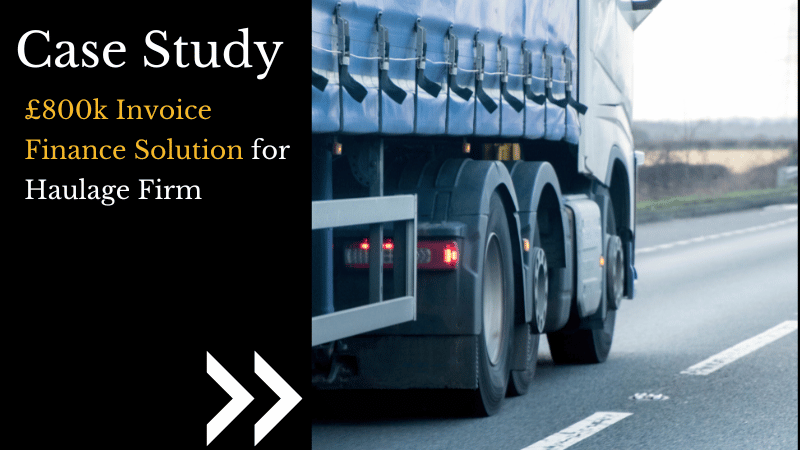
However, repeated bridging of payment delays can represent an unstable long-term structure that leads to an over-reliance on business loans, costing the business significantly in fees and interest. Businesses finding themselves needing to regularly offset payment terms may want to consider bespoke invoice financing.
This provides access to capital based on invoice values as they are issued, offering a revolving credit facility that can be utilised as and when needed to help maintain smooth cash flow throughout the year.
Seasonal Cash Flow Difficulties
Businesses that operate with seasonal fluctuations in income can experience peaks and troughs in account stability, with cash flow stretched during weaker periods and seemingly flush during the stronger months.
The strongest strategy is usually two-fold: first, to set repayment terms on any cash flow loans short enough to ensure repayment is made in full before future seasonal dips; secondly, to build capital reserves during the stronger months to see through the difficult periods.
Lenders are readily available to support business needs while stabilisation is established, but may be cautious regarding over-reliance.
Growth Pressure
During a prolonged period of expansion, cash flow is under pressure from several fronts, with marketing, development, and other growth areas in demand of capital that can put strain on day-to-day finances.
Businesses exploring growth initiatives may benefit from a range of funding alternatives, from staged capital injections for development, to stock finance or showroom finance to increase inventory.
At Clifton Private Finance, we will work with you to explore the range of options that can provide low-cost funding for your expansion plans.
Unexpected Costs
Holding too much capital back for unexpected events can be extremely costly for long-term business expansion, stifling growth by ringfencing funds ‘just in case’. Balancing the need for reserves against efficient growth initiatives is often complex.
Cash flow loans can provide an extra boost when needed, bringing existing reserves to the level needed to meet any unplanned costs.
As the very nature of unexpected costs is that they are not planned for, timeliness is a major factor in effective financing. While traditional secured loans may represent a better cost-to-capital ratio, often other products are used to take advantage of rapid application and faster underwriting.
These may include:
- Unsecured business loans - usable by businesses with strong creditworthiness.
- Merchant cash advance - excellent for B2C businesses with established card transaction histories.
- Bridging finance - powerful, high-value funding secured on property or other premium assets.
Fast-access funding can often form an immediate short-term solution that is refinanced by lower-cost debt once the situation is stabilised.

Underlying Business Difficulties
When the cash flow pressure comes from a struggling business, a business loan for cash flow is ill-advised. Taking on new debt obligations when the business has a structural loss will only add to future cash flow pressures and may affect creditworthiness such that it reduces the availability of more appropriate funding help.
Business owners who are facing underlying difficulties should seek advice before making any short-term loan application.
Clifton Private Finance can help you evaluate your position and offer support, reviewing your capital structure and exploring finance restructuring options that may provide the stability you need to return to profitable operations.
Obtaining a Business Loan for Cash Flow with Clifton Private Finance
Clifton Private Finance is a UK whole-of-market business finance broker. Our business finance team has established relationships with an extensive network of UK lenders, offering specialist products tailored to suit your unique circumstances.
We offer:
- An independent holistic overview of your current business finance and evaluation of cash flow stresses
- Expert advice to help you make an informed decision for cash flow finance
- Access to the full UK lending landscape, matching your business to an appropriate lender
- Comparison between loan options to explore the most competitive rates
- Pre-approval process to speed up application and reduce complications
- Ongoing support