


Categories
Self Assessment Tax Loans: Help to Pay Your HMRC Tax Bill

Your personal tax bill as a self-employed sole trader, partner, or limited company business owner can be difficult to manage.
While HMRC provides ongoing reminders, January’s online tax return deadline can come around far too quickly and facing a personal bill immediately after the high-expense Christmas and New Year season is challenging, especially if it’s larger than expected.
Get a Tax Finance Quote
Complete the simple form to receive your tailored tax finance options.
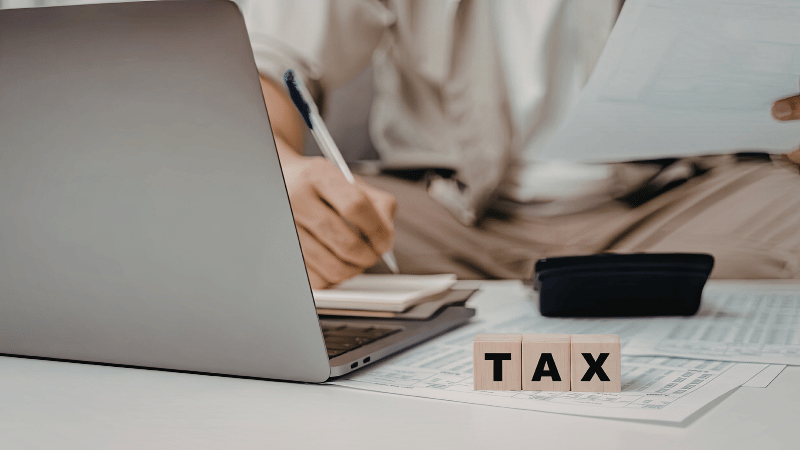
A self assessment tax loan offers relief from HMRC pressure. With terms that are flexible to suit your circumstances, a tax loan enables you to spread the cost of all or part of your tax bill across later months, turning a major financial hit into manageable monthly payments.
At Clifton Private Finance, we can help you secure a self assessment tax loan at a competitive rate, comparing the range of banks and specialist lenders to find a flexible loan that suits your situation.
What is a Self Assessment Tax Loan?
A self assessment tax loan provides you with a lump sum to clear your balance with HMRC before it becomes overdue, triggering fees and interest. By spreading the cost of your tax bill, you can manage payments and avoid fines.
Because your self assessment tax bill is a personal obligation, a self assessment tax loan is a personal loan. This means it cannot use your business standing as leverage, nor should you directly use business accounts to make payments.
Tax loans for personal use are typically unsecured and short-to-mid-term, with repayment schedules from 12 to 36 months.
For this reason, at Clifton Private Finance, we examine your current financial position as well as future forecasts, making sure that you can comfortably meet the tax loan repayments.
As an unsecured loan, self assessment tax loans are assessed based on your personal credit rating, with greater acceptance and lower interest rates available for individuals with stronger credit histories.
Our established relationships with specialist bad credit lenders, however, open the door to a range of cost-efficient tax loans paid directly to HMRC for sole traders and directors with lower credit scores, helping make sure you can meet important tax obligations.
When Do You Have to Pay a Self Assessment Tax Bill?
The main payment date for self assessment is 31st January of each year, with a secondary payment date of 31st July. However, with the payments on account system, focusing on the end of January is misleading - it’s a little more complicated and nuanced.
Get a Tax Finance Quote
Complete the simple form to receive your tailored tax finance options.
Your First Self Assessment Tax Bill
With no history and pre-payments with HMRC, it is your first substantial self assessment tax bill that is the most difficult to manage. HMRC require UK taxpayers to pay their tax in advance, through a system known as payments on account.
This means that the first 31st January bill you receive is significantly larger than just your first year of owed tax - it also includes a pre-payment for half of the following year. This is your payment on account, which is split into two - half in January, and the second half in July.
The 150% Tax Payment
This first obligatory payment to HMRC is made up of:
- Your total income tax owed for the accounting year.
- Your Class-4 National Insurance Contributions (NIC) for the accounting year.
- Your first income tax and NIC payment on account, estimated as 50% of the previous year’s total.
When totalled, your self assessment tax bill on 31st January can be substantially larger than expected, making the support and flexibility offered by a self assessment tax loan even more welcome.
Your 31st July Payment on Account
Six months later, you will have a tax liability for the second payment on account. This is equal to the first - a 50% estimate based on the previous accounting year’s tax.
- Your second income tax and NIC payment on account, estimated as 50% of the previous year’s total
As with the 31st January obligation, failure to meet your end of July payment will result in interest charges and potential penalties if the payment remains outstanding.
Your Second Year Tax Payment
With payments on account now in place, your next tax bill should be more manageable. However, changes in income and expenses can complicate the calculation.
You will have paid on account an amount equal to your previous accounting year’s tax and NIC.
What remains is:
- The balance of any difference between the payments made on account and the current accounting year’s total
This balance may be positive, if you have earned more this year and thus owe more tax, or negative, if you have earned less and are due a rebate.
Once more, you must pay 50% of the following year on account, based on the most recent self assessment figures.
Continued Payments on Account and Balance Payments
Once settled in the system, you will continue to make payments on account for the coming year in January and July. When finalised calculations are made each January, you will also have to pay any balance due.
Why Use a Self Assessment Tax Loan to Pay Your Tax Bill?
The unexpected shock of a larger than expected tax bill can play havoc with your personal finances, especially in the first year, when an early estimate of taxes owed can multiply when the final calculation is completed.
Many business owners find themselves in the position of simply not having put aside enough to meet the obligation.
Even those who can viably reassign money to meet the liability may find the additional pressure it puts on personal finances too restraining. Money earmarked for investment, family and personal use, or business support is suddenly wiped out, and personal cash flow is tightened uncomfortably.
Tax loans present an efficient solution, offering cost-effective support to meet the obligation.
It is also important to maintain a positive relationship with HMRC. Failure to pay a self assessment tax bill on time can lead to:
- Immediate interest charges
- Potential fees and penalties
- CCJs and enforcement, which can impact your personal credit score
- Limitation of future options
In extreme cases, failure to pay can result in legal action. As a core government institution, HM Revenue and Customs must maintain institutional equality, which can be inflexible for individuals seeking additional time or support.
Clifton Private Finance can help you secure a suitable tax loan that will spread the cost of your tax payment, turning a difficult obligation into a manageable repayment plan.
Self Assessment Tax Loans vs. HMRC Time to Pay
A self assessment tax loan is not the only way you can spread the cost of your tax bill. HMRC offers a service called Time to Pay (TTP) that offers a payment plan to help those struggling with their self assessment bill.
Time to Pay, however, is not always an available option, nor is it always the best choice for everyone.
HMRC is not a bank. A TTP payment plan is available at their discretion and is based on certain criteria. To be eligible, it is essential that you make your application as soon as possible and have a realistic ability to repay the debt within a short time frame.
Additionally, TTP is potentially rejected when previous communication has been poor, previous tax payments have been significantly delayed, or if there are any prior signs of avoidance.
Successful applicants:
- Are not significantly in tax arrears.
- Have few (or zero) issues with previous tax payments.
- Often set up TTP before or on the payment deadline, with self assessment submitted before 31st January.
- Display a clear ability to make payments without complication.
- Agree to a short-term repayment schedule, often 12 months or fewer.
- Do not have a history of over-reliance on TTP from previous years.
Specialised tax loans are more flexible and are typically more appropriate when:
- TTP is not offered.
- TTP payments would be too high, and a longer term with lower repayments and greater flexibility is needed.
- Other debt obligations impact affordability and cash flow.
- You have multiple complex income streams, including international currency income.
- Current credit history requires specialist loan support.
- You have recent CCJs or other significant high-impact credit events.
Additionally, lenders may be willing to provide higher sums, giving you the flexibility to meet your tax obligation and obtain extra cash for other uses.
At Clifton Private Finance, our tax loan experts will work with you to find a solution that overcomes obstacles, no matter how complex your circumstances.
We can match you to a specialist lender who understands your position and can tailor a loan to meet your exact needs.
Get a Tax Finance Quote
Complete the simple form to receive your tailored tax finance options.
How Do Self Assessment Tax Loans Work?
Unlike TTP, a self assessment tax loan can be applied for at any stage of the tax repayment cycle, including if you have had a prior Time to Pay arrangement that has become difficult to manage. They can be structured in several ways to fit your particular circumstances.
Unsecured Loans vs. Secured Loans
The most common tax loan is an unsecured loan for £25,000 or less. With a defined purpose of a tax bill repayment, an unsecured tax loan provides lenders with well-understood underwriting criteria, which can help smooth the application process.
Unsecured loans rely on credit scoring for lender risk assessment. Applicants with good credit histories are more likely to obtain a loan on favourable terms.
At Clifton Private Finance, we can help by comparing products from the full network of UK lenders, finding the most competitive rates and helping you secure an appropriate deal across a wide range of financial circumstances.
Secured loans offer a lower rate and potentially larger sums than unsecured options. Typically leveraged against property, secured loans offer the lender additional guarantees that lower risk and improve acceptance rates.
While the majority of secured loans are tied to equity in your home, some specialist lenders will accept alternative valuable assets as collateral. This may include artwork, classic cars, specialist collections, or other investments.
Speak to an adviser to discuss secured tax loan options that meet the larger sums needed for those in higher earning brackets.

Repayment Terms
Both secured and unsecured tax loan options can be tailored to fit your personal circumstances and monthly cash flow. Repayment terms can be structured to spread the cost efficiently, ensuring that the impact of repayments is manageable throughout the loan lifetime.
With a view to clearing a tax loan before the next tax cycle and additional liability, many lenders suggest matching a repayment schedule to the available window, resulting in short-term loans of 6-12 months.
For unsecured loans, the typical maximum loan term is 7 years (84 months), while property secured loans and second-charge mortgages may extend to 20 years+ if needed.
Longer repayment terms result in lower monthly payments but higher overall cost. Balancing ease of repayment management with long-term impact is essential before completing a tax loan application.
Application
Individuals seeking tax loans should speak to a Clifton Private Finance expert. We will discuss your particular circumstances and develop a solution that meets your precise requirements.
Applicants will need:
- Identity documents
- Details of your current and expected tax liabilities
- Income and expenses calculations
- Current bank statements (3-6 months)
- Recent self assessment calculations (SA302)
Who Can Use a Self Assessment Tax Loan?
Personal self assessment tax loans are for:
- Sole traders
- Partners
- Company directors
- Private landlords
- Salaried employees with secondary ‘gig-based’ work
If you are required to submit a self assessment tax return (SA100), you may be eligible for a personal tax loan.
Self assessment tax loans are not for:
- Paying corporation tax
- Meeting payroll obligations
- Settling VAT accounts (see VAT loans)
- Other business needs or expenses
Businesses needing to meet corporate tax obligations, including VAT or corporation tax loans, should speak to a Clifton Private Finance business finance expert or explore our knowledge base to learn more.
What to Consider Before Taking Out a Self Assessment Tax Loan
As with all loans, it is important to evaluate your options carefully. Speaking to an expert will help you understand the different products available to help you and ensure you get the most suitable solution.
Before taking out a self assessment tax loan:
- Complete your self assessment tax return to obtain a final calculation for your tax liability
- Make sure you understand payment on account and have considered both January and July payment needs
- Consider your personal circumstances, your affordability, and a realistic monthly payment level
- Explore HMRC Time to Pay options
- Obtain your latest credit report and, if time allows, focus on improving your score if needed
- Compare secured and unsecured options, if relevant
- Discuss your circumstances with a Clifton Private Finance adviser

Self Assessment Tax Loans with Clifton Private Finance
At Clifton Private Finance, our specialist brokers are on hand to help you find a tax loan that suits your personal situation.
As a whole-of-market finance broker, we have established relationships with a wide range of UK lenders and can match you to a provider suited to your specific needs.
Our team will:
- Discuss your whole financial position to understand the wider picture of your finances and provide the best support
- Explore the full market of products to find a tax loan that best meets your requirements
- Explain the nuances of tax loan terms to help you make an informed decision
- Help with the application process, easing the administrative burden
- Go through a thorough pre-approval assessment, evaluating your application before taking it to a lender
- Introduce you to lenders that are the best fit for you
- Provide ongoing support throughout the process and beyond
For a tax loan that frees you from the worry and pressure of a large self assessment tax bill, contact Clifton Private Finance today.